
Uzbekistan: Language, Culture and History
Uzbekistan, at the crossroads of the Great Silk Road, is a land of rich history, ancient cities, a unique culture, national cuisine and heartfelt hospitality. Discover its rich cultural heritage and get to know the customs, traditions and way of life of the Uzbek people up close.
01General information about Uzbekistan
Uzbekistan is an independent country in the heart of Central Asia, proud of its long history and rich cultural heritage. Once a major crossroads of the Silk Road, the region grew into a centre of trade linking East and West and a place where science and culture flourished through lively exchange. Uzbekistan declared its independence on 31 August 1991 and celebrates Independence Day every year on 1 September.
Key facts
| Indicator | Details |
|---|---|
| Official name | Republic of Uzbekistan |
| Capital | Tashkent |
| Location | Central Asia |
| Area | About 449,000 km² |
| Population | About 39.54 million (as of 1 October 2026) |
| Official language | Uzbek |
| Currency | Uzbek som (UZS) |
| Form of government | Republic |
| Independence Day | 1 September |
| Time zone | UTC+5 (4 hours behind South Korea) |
| International dialling code | +998 |
| Internet domain | .uz |
Population source: National Statistics Committee of the Republic of Uzbekistan.
Population by region
As of 1 October 2026, Uzbekistan had 39,535,225 permanent residents (about 39.54 million), 1.8% more than a year earlier. The figures reflect the results of the census held in 2026.
| No. | Region | Population |
|---|---|---|
| 1 | Samarkand Region | 4,462,783 |
| 2 | Fergana Region | 4,293,001 |
| 3 | Tashkent Region | 3,799,043 |
| 4 | Kashkadarya Region | 3,746,228 |
| 5 | Andijan Region | 3,574,464 |
| 6 | Tashkent City | 3,278,512 |
| 7 | Namangan Region | 3,190,767 |
| 8 | Surkhandarya Region | 3,030,030 |
| 9 | Republic of Karakalpakstan | 2,166,044 |
| 10 | Khorezm Region | 2,162,068 |
| 11 | Bukhara Region | 2,125,129 |
| 12 | Jizzakh Region | 1,545,176 |
| 13 | Navoi Region | 1,196,559 |
| 14 | Syrdarya Region | 965,421 |
| Uzbekistan | 39,535,225 |
Source: National Statistics Committee figures, Government portal of the Republic of Uzbekistan.
Geography and nature
Uzbekistan is a landlocked country in Central Asia that borders five countries: Kazakhstan, Kyrgyzstan, Tajikistan, Turkmenistan and Afghanistan. Its landscapes range from vast deserts and mountain ranges to valleys, rivers and fertile oases. Notable features include the Kyzylkum Desert, the western Tian Shan mountains and the Fergana Valley. The climate is typically continental: summers are very hot and dry, winters are cold, and temperatures vary widely from region to region.
Administrative divisions
Uzbekistan consists of the Republic of Karakalpakstan, 12 regions and the capital, Tashkent, which has special administrative status. Each region has its own history, culture and natural environment, and Tashkent, Samarkand, Bukhara, Khiva and Fergana are among the country's best-known cities and regions.
Population and cultural diversity
Uzbekistan is a multi-ethnic country where many peoples and cultures live side by side. Alongside Uzbeks, it is home to Karakalpaks, Tajiks, Kazakhs, Russians, Kyrgyz, Turkmens, Koryo-saram (ethnic Koreans) and many others. Most of the population is Muslim, but under the Constitution Uzbekistan is a secular state that guarantees freedom of conscience and religion. This ethnic and cultural diversity shows in the country's languages, food, holidays, traditions and everyday life.
Historical and cultural heritage
Since ancient times, the land that is now Uzbekistan has been an important cultural centre where Silk Road trade, science, the arts and crafts flourished. Figures closely tied to the history of Central Asia, such as Muhammad al-Khwarizmi, Abu Ali ibn Sina (Avicenna), Abu Rayhan al-Biruni, Mirzo Ulugbek and Alisher Navoi, had a great influence on world civilization in mathematics, medicine, astronomy, philosophy and literature. Today, Samarkand, Bukhara, Khiva and other cities still preserve architecture and heritage from the Silk Road era, where traditional crafts and modern culture come together to give Uzbekistan its unique charm.
Official sources: Government portal of the Republic of Uzbekistan · National Statistics Committee · Constitution of the Republic of Uzbekistan
02The Uzbek language and script
Uzbek is the state language of Uzbekistan and belongs to the Karluk branch of the Turkic language family. It is closely related to Uyghur, from the same branch, and shares much vocabulary and grammar with other Turkic languages such as Turkish, Azerbaijani, Kazakh and Kyrgyz. Uzbek is spoken not only in Uzbekistan but also by Uzbeks living in Afghanistan, Tajikistan, Kyrgyzstan, Kazakhstan, Turkmenistan and other countries.
The Uzbek script
Over its history, Uzbek has been written in several scripts, including Arabic, Latin and Cyrillic. In 1993 Uzbekistan passed a law introducing an Uzbek alphabet based on the Latin script. Today the Latin script is mainly used in school textbooks, official documents and street signs, while Cyrillic is still used in everyday life, some publications and online media. Russian is also widely spoken, especially in large cities.
The current Latin-based Uzbek alphabet was adopted in 1995. It has 26 letters, including Oʻ and Gʻ, three letter combinations (Sh, Ch and Ng) and the apostrophe sign ʼ. On 21 October 2026, Uzbek Language Day, the President of Uzbekistan signed a law updating this alphabet. Following the principle of “one sound, one letter”, Oʻ becomes Ö, Gʻ becomes Ğ, Sh becomes Ş and Ch becomes Ç, while Ng is no longer listed separately, although it is pronounced the same way. The new alphabet has 28 letters and one apostrophe and comes into force on 22 April 2027. First-grade textbooks in the new alphabet are planned from 2027, and all textbooks by 2031. InoBiba already uses the new letters.
| New letter | Old spelling | How it sounds | Example |
|---|---|---|---|
| Ö ö | Oʻ oʻ | A rounded “o”, as in “more” | özbek (oʻzbek): Uzbek |
| Ğ ğ | Gʻ gʻ | A soft, throaty “g”, close to the French “r” | toğ (togʻ): mountain |
| Ş ş | Sh sh | “sh”, as in “shop” | şahar (shahar): city |
| Ç ç | Ch ch | “ch”, as in “chair” | çoy (choy): tea |
Sources: Government portal of Uzbekistan · Daryo · Dunyo
Similarities between Uzbek and Korean
Although Uzbek and Korean belong to different language families, their grammar has several things in common.
| Feature | Uzbek | Korean |
|---|---|---|
| Basic word order | Ega – töldiruvçi – kesim | 주어 – 목적어 – 서술어 |
| Example sentence | Men kitobni öqiyman. | 저는 책을 읽습니다. |
| Plural | kitoblar | 책들 |
| Location (at, in) | maktabda | 학교에서 |
| Direction (to) | maktabga | 학교에 |
| Addressing others politely | sen (informal) / siz (respectful) | 너 / 당신·선생님 등 (상황에 따라 다름) |
In both languages the verb usually comes at the end of the sentence, and grammatical meaning is expressed through particles, suffixes and endings. For example, the Uzbek suffix -ni works much like the Korean object particle 을/를, and -ga is similar to 에, which shows direction. These similarities can help learners of either language understand sentence structure. However, the two languages differ in pronunciation, vocabulary and honorifics, so it is important to learn the features of each language as well.
Learn Uzbek with InoBiba!
New to Uzbek? InoBiba offers 10 free beginner Uzbek lessons explained in Korean and English. You can learn step by step, from greetings and introducing yourself to everyday words and expressions and basic grammar.
03Historic cities and cultural heritage
Samarkand
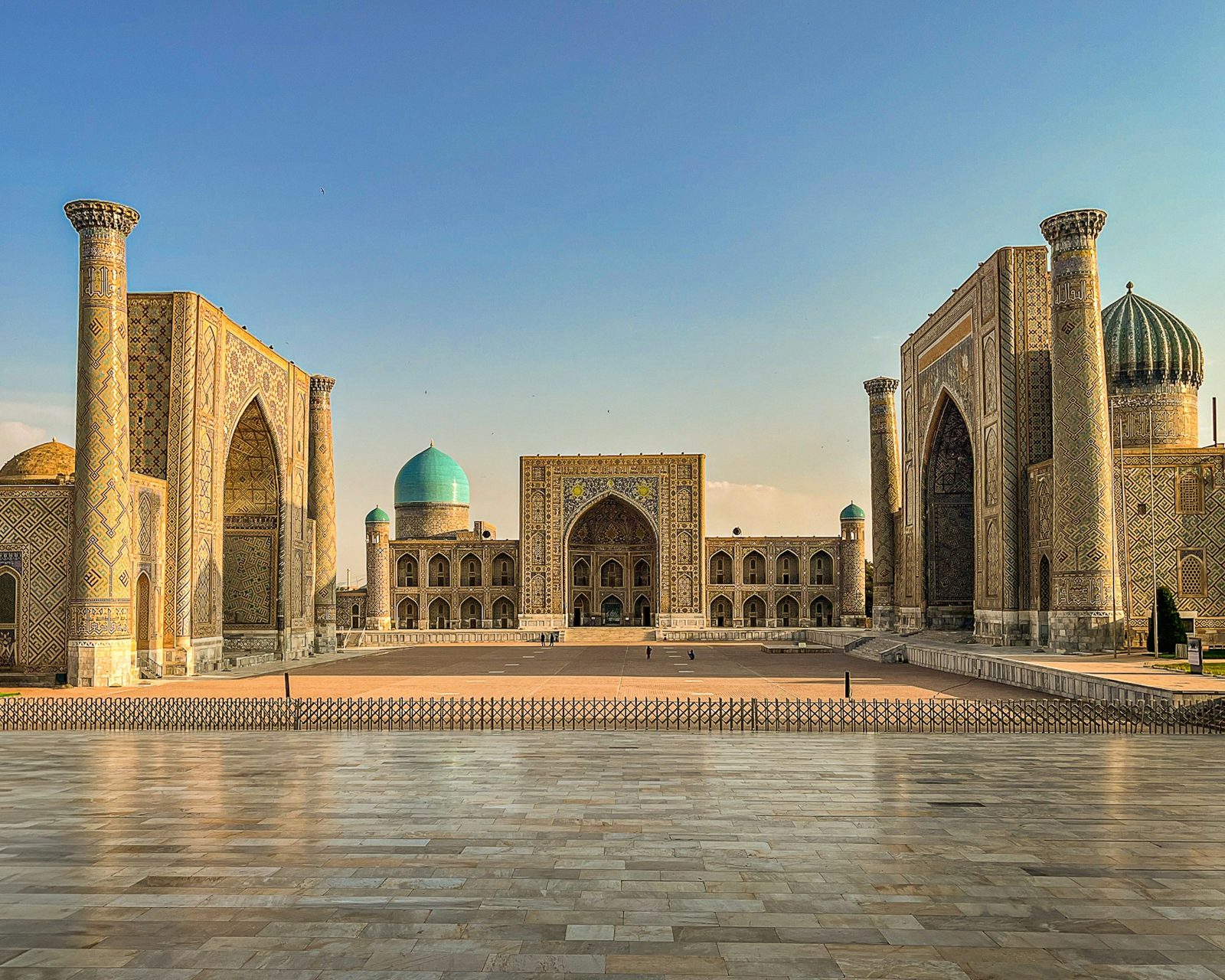
Samarkand is one of Uzbekistan's oldest cities and one of the great cities of the Silk Road, with a history of more than 2,500 years. For centuries, merchants, travelers and scholars moving between East and West met here to trade goods, knowledge and culture. In the late 14th century, Amir Temur made Samarkand the capital of his empire, and the city grew into a center of politics, learning and the arts, famous for its magnificent architecture.
If this is your first visit, start at Registan Square. The three madrasas (Islamic schools) around the square are decorated with brilliant blue tiles and intricate geometric patterns. Walk along the narrow path of the Shah-i-Zinda necropolis to admire tile colors and patterns that differ slightly from one mausoleum to the next. Gur-e-Amir, where Amir Temur and members of his family are buried, is another historic site not to be missed.
To experience the lively side of everyday life, stop by Siyob Bazaar. The market sells Samarkand's traditional bread, non, along with dried fruit, nuts, spices and much more. Buying Samarkand bread baked in a tandir (traditional clay oven), dipping it in qaymoq (rich clotted cream) and enjoying it with a cup of hot tea is a taste of the city's simple yet special food culture.
Bukhara
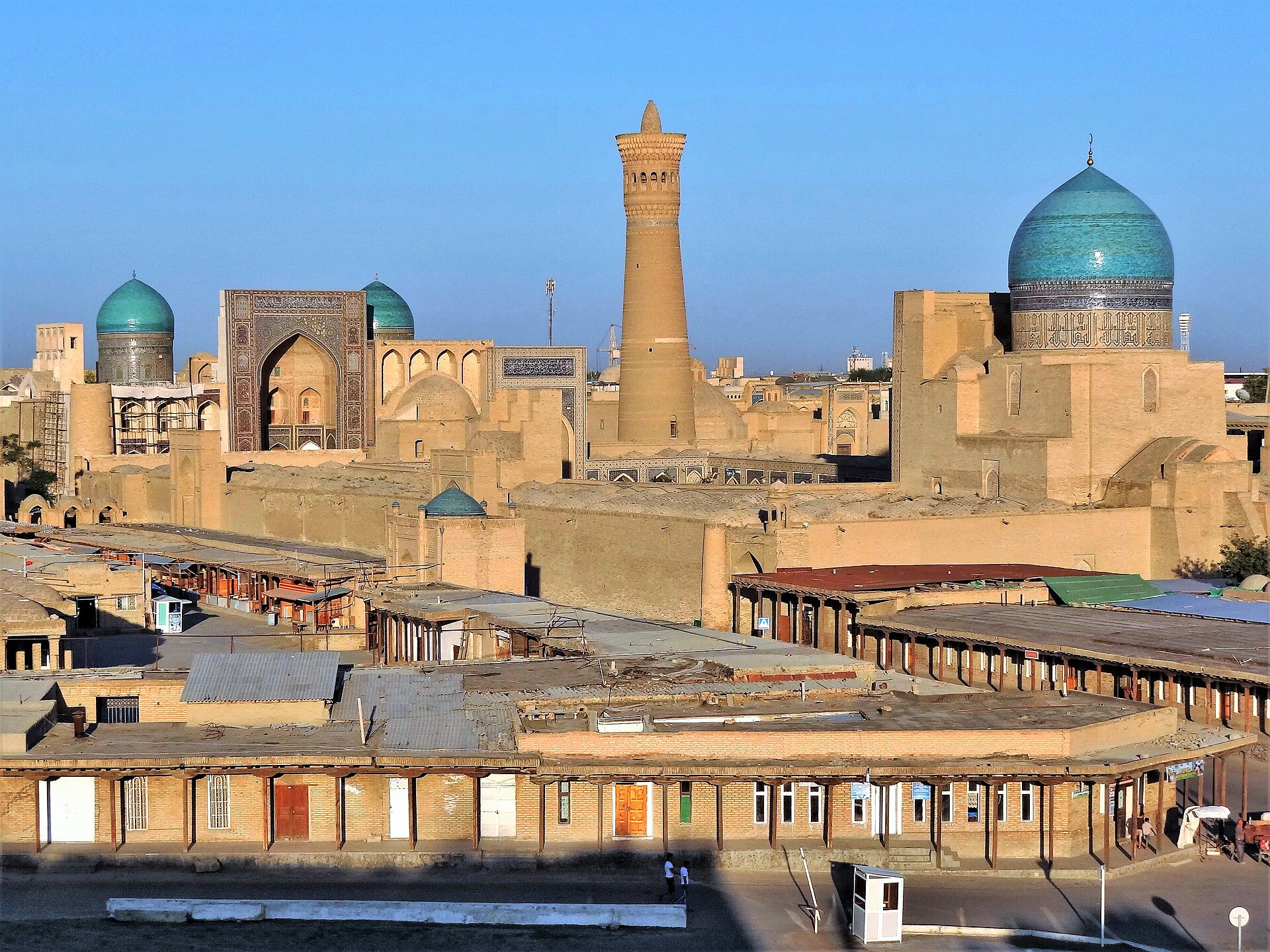
Bukhara is one of the great cities of the Silk Road, with more than 2,000 years of history, and for centuries it developed as a center of trade, Islamic learning and culture. In the Middle Ages it flourished as one of Central Asia's leading centers of learning and religion, and many mosques, madrasas (Islamic schools), mausoleums and traditional markets still stand today. In 1993 the historic center of Bukhara was inscribed on the UNESCO World Heritage List in recognition of its historical and cultural value.
Begin your tour of the old city at the Ark, the fortress that once served as the palace of Bukhara's rulers. At the Poi Kalon complex, admire the towering Kalon Minaret and its intricate brickwork. The Ismail Samani Mausoleum is famous for its unique geometric patterns, created by laying bricks in many different ways. Browsing handicrafts and souvenirs under the domes of the old bazaars is another pleasure of a visit to Bukhara.
After your walk, head to Lyabi Hauz. Surrounded by old buildings and teahouses, the pool is a lovely place to relax with a cup of hot tea. At sunset, soft light falls on the surrounding buildings, giving Bukhara its peaceful, timeless atmosphere. With its historic monuments, old lanes and traditional way of life, Bukhara is a charming city to explore slowly on foot.
Source: UNESCO World Heritage Centre
Khiva
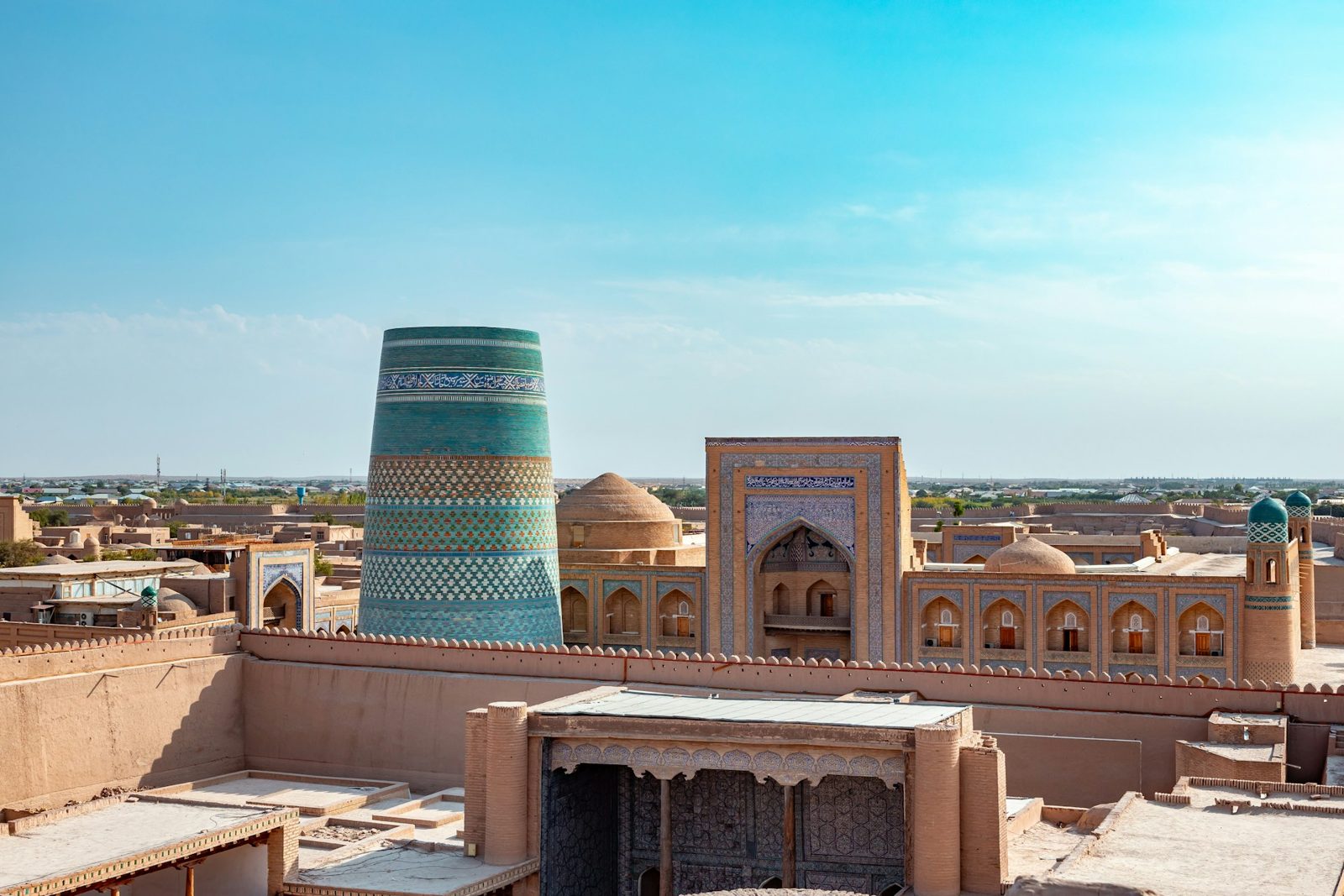
Khiva is an ancient city in the Khorezm Region of western Uzbekistan and was one of the important trading posts of the Silk Road. Merchants and caravans heading across the desert to Iran and other lands stopped here to rest and exchange goods and news. Its walled old town, Itchan Kala, preserves mosques, madrasas (Islamic schools), palaces and minarets, and was added to the UNESCO World Heritage List in 1990.
Pass through Ota Darvoza, the western gate of Itchan Kala, and your eye will be drawn to Kalta Minor, covered in turquoise tiles. Left unfinished, this minaret has become the best-known symbol of Khiva. Nearby, the Kunya Ark fortress offers a glimpse of where Khiva's rulers lived and governed. Follow the narrow lanes to the Juma Mosque, where a forest of finely carved wooden columns holds up the ceiling of the prayer hall.
With its old lanes, earth-colored buildings and blue tilework inside the city walls, Khiva feels like a journey back in time. Wander slowly through the lanes to browse traditional handicrafts, or take in the view of the old town from a lookout on the walls. At sunset, the buildings and walls glow golden, making Khiva even more beautiful.
Sources: UNESCO World Heritage Centre · visit-uzbekistan.org
Tashkent
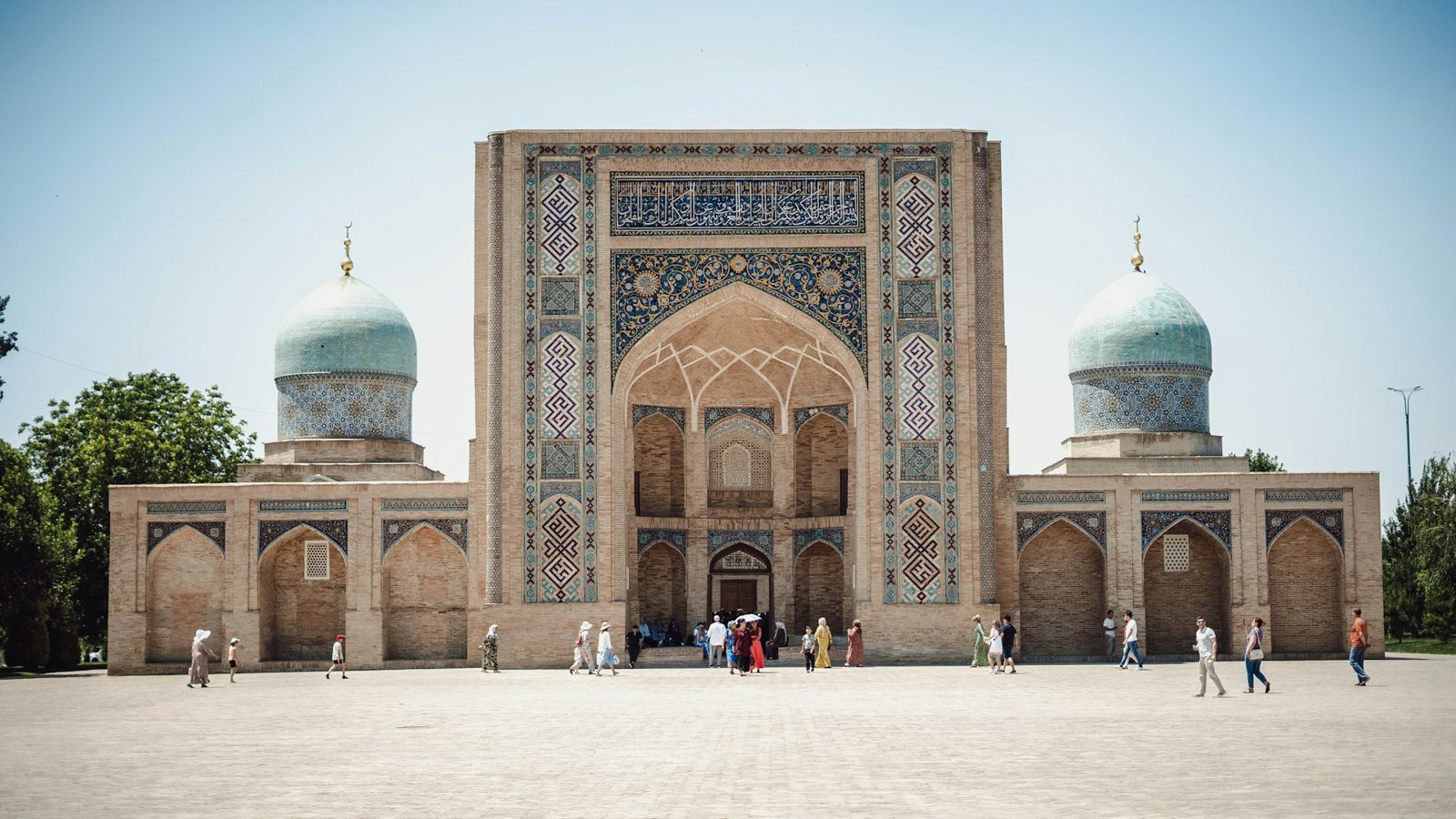
Tashkent is the capital of Uzbekistan and its political, economic and cultural center, where a long history meets a modern cityscape. On a first visit, start at Chorsu Bazaar in the old city. Beneath its great blue dome, stalls sell spices, dried fruit, nuts and fresh produce, giving you a close-up look at the busy daily life of local people. A short walk from the bazaar is the Kukeldash Madrasa (an Islamic school), built in the 16th century.
One sight not to miss in Tashkent is the metro. The first metro in Central Asia, it is known for stations that each have their own architectural style and artistic decoration. Alisher Navoi station is famous for its ornate ceilings and traditional patterns, and Kosmonavtlar station for its unique space-exploration theme. Riding the metro lets you move easily around the city while enjoying Tashkent's architecture and art.
Amir Temur Square in the city center shows Tashkent's modern face. In the middle of the square stands an equestrian statue of Amir Temur, surrounded by the State Museum of Timurid History, hotels and other buildings. With its wide avenues, parks and modern buildings, Tashkent offers many attractions, from lively traditional markets and beautiful metro stations to relaxed city streets.
Sources: Official Uzbekistan tourism portal · Introduction to the Tashkent metro
Fergana Region
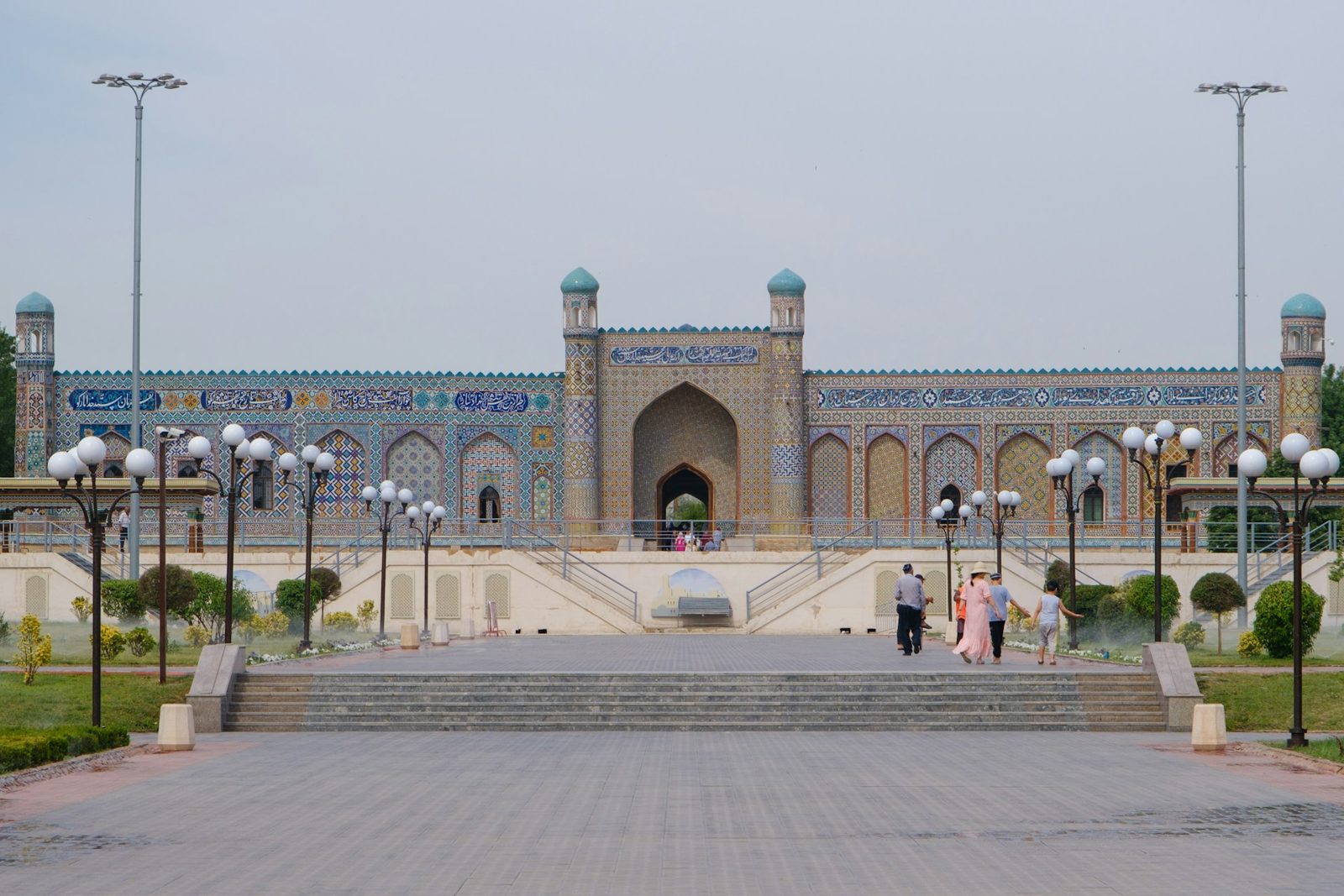
The Fergana Region lies in the Fergana Valley in eastern Uzbekistan and is known for its fertile land, abundant produce and long tradition of handicrafts. Trade and cultural exchange along the Silk Road have shaped the region since ancient times, and traditional weaving and pottery skills are still passed down today. The region is home to Kokand, Margilan, Rishtan and other towns where history and craftsmanship remain alive.
Begin your trip through the Fergana Region at Khudoyar Khan's Palace in Kokand. Built in the 19th century under the Kokand Khanate, the palace is famous for its rich colors and intricate tilework. The colorful patterns on its entrance show the outstanding skill of the craftsmen of the time. Artisans from Rishtan and other places took part in building and decorating the palace. Inside, you can learn about the history of the Kokand Khanate and the way of life at the time.
Margilan is widely known as the home of the traditional silk fabrics atlas and adras. Their distinctive patterns come from a traditional technique in which the threads are dyed before weaving, and in local workshops you can watch artisans weave the fabric on a loom. Rishtan, meanwhile, is famous for ceramics with blue glazes and delicate patterns. You can watch potters shape clay into dishes, paint patterns on them, then glaze and fire them in a kiln. Through these traditional crafts, the Fergana Region lets you experience Uzbekistan's long tradition of craftsmanship and way of life.
Sources: Official Uzbekistan tourism portal – Khudoyar Khan Palace · UNESCO Intangible Cultural Heritage – Margilan atlas and adras making
Shahrisabz
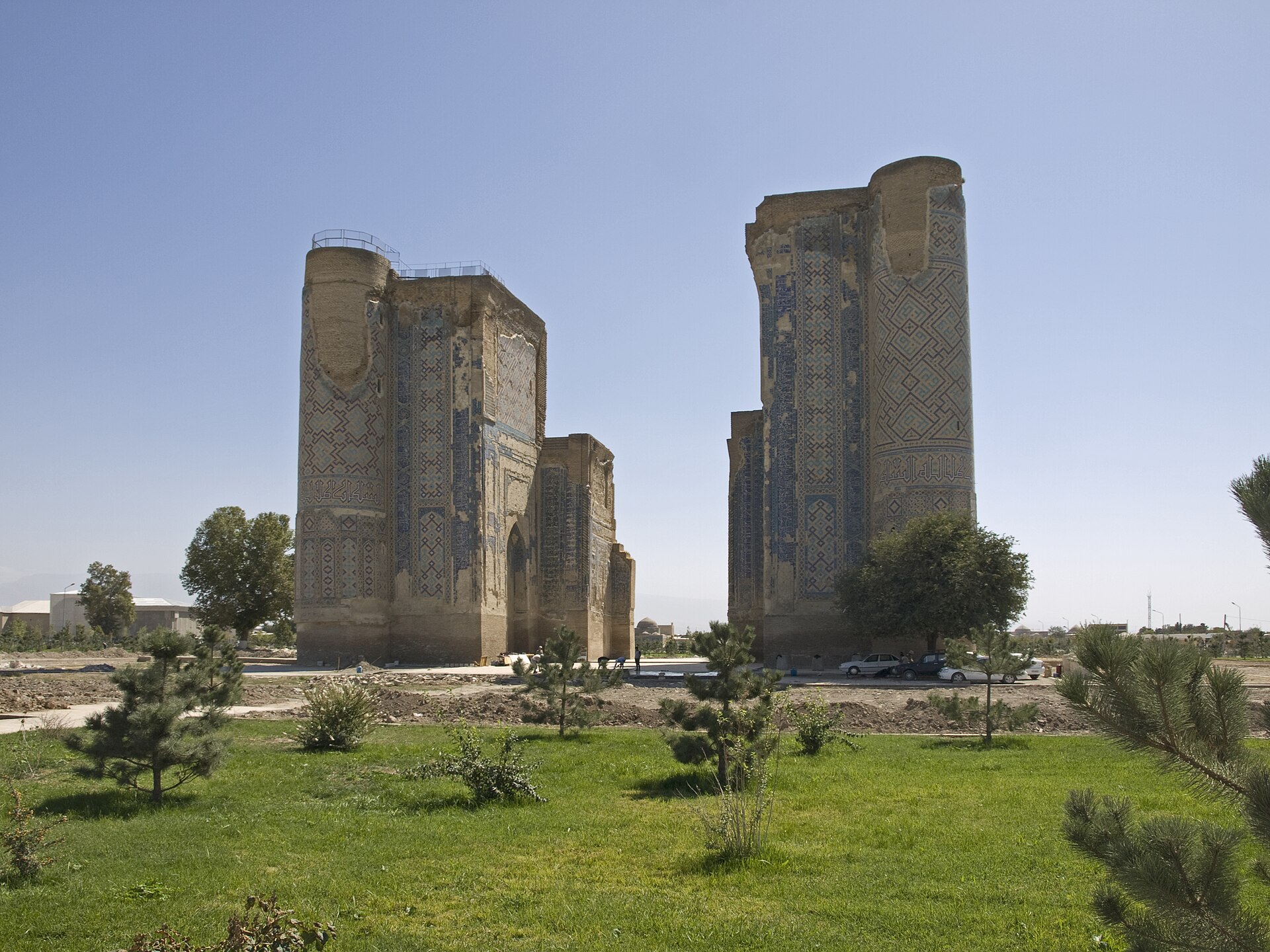
Shahrisabz is a city with a long history in the Kashkadarya Region of southern Uzbekistan, best known as the homeland of Amir Temur. Temur was born in 1336 in the village of Khoja Ilgar near Shahrisabz and went on to build a vast empire centered on Central Asia. Once also known as Kesh, Shahrisabz preserves buildings and historic sites from the Timurid era. In 2000 the historic center of Shahrisabz was inscribed on the UNESCO World Heritage List.
The city's signature monument is Oqsaroy Palace, commissioned by Amir Temur. Most of the once magnificent palace has been lost, but parts of its huge entrance structure still stand today. The two towering remains are covered in intricate patterns of blue and turquoise tiles, revealing the outstanding building skills of the time. Standing in front of them, you can imagine how vast and splendid the palace must once have been.
The Dorut Tilovat and Dorus Saodat complexes in Shahrisabz are also worth a visit. Here you can see religious buildings and burial grounds linked to the Timurid dynasty and learn about the history and culture of the time. On the way from Samarkand to Shahrisabz, you can also enjoy mountain scenery. Shahrisabz is a city where you can explore both the remains of a grand palace and the history of the Timurid dynasty.
Sources: Official Uzbekistan tourism portal · UNESCO World Heritage Centre – Historic Centre of Shakhrisyabz
04Uzbek national dishes
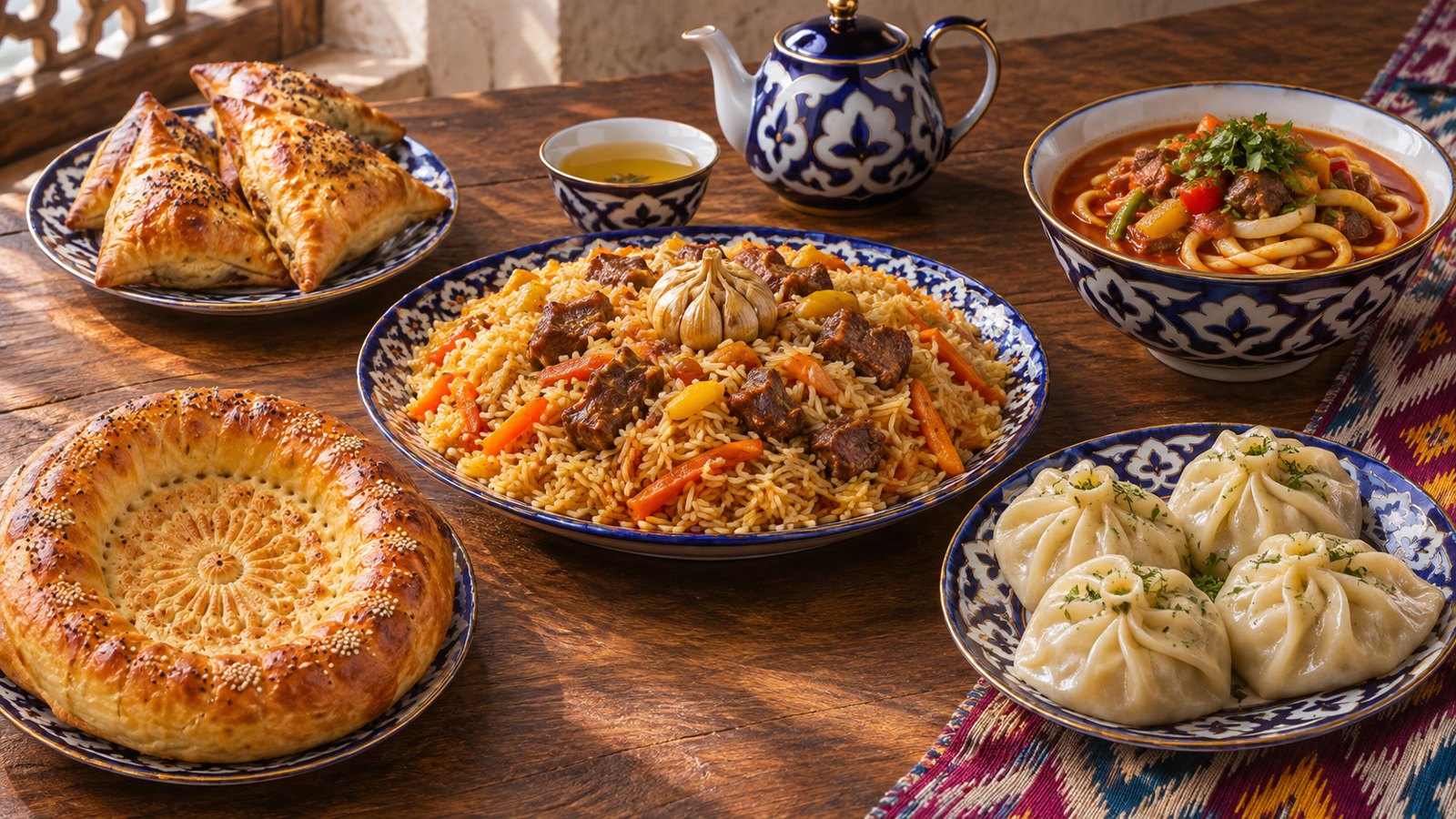
Uzbek cuisine is famous for its rich flavors, wide variety of dishes and traditions of hospitality. Bread and tea often come first at an Uzbek table. Round tandir non is broken by hand and shared, and green tea is poured into small bowls called piyola. Eating freshly baked warm bread with qaymoq (clotted cream) and chatting over a bowl of tea is an essential part of Uzbek hospitality. As guests sip their tea and talk, salads, sweets and hot dishes are brought to the table. In Uzbekistan, a meal is not just about filling the stomach: it is an important tradition that brings family and loved ones together around one table.
Among Uzbek national dishes, palov, somsa, lag‘mon, manti, chuchvara, kabob (shashlik) and shorva hold a special place. Palov is made from rice, carrots, meat and spices, and is often served at weddings, holidays and family gatherings. "Palov culture and tradition" was added to UNESCO's Intangible Cultural Heritage list in 2016. Somsa is baked in a tandir or an oven and is usually filled with meat and onions, sometimes with pumpkin or greens. Lag‘mon is made with hand-pulled noodles and a meat and vegetable sauce. Manti are filled with meat and onions or pumpkin and steamed, while chuchvara are small dumplings that are usually boiled. Every region has its own recipes and cooking methods, which show the richness and variety of Uzbek cuisine.
05National holidays, customs and traditions
Uzbekistan has a rich cultural heritage shaped by centuries of history, family values, and traditions. National holidays bring families, friends, and communities together through celebrations, traditional food, music, and cultural activities. One of the most beloved holidays is Navruz, celebrated on March 21 to welcome spring and symbolize renewal and new beginnings. Families prepare special dishes such as sumalak, visit relatives, and participate in community festivities.
Major national holidays
| Date | Holiday | Traditions and significance |
|---|---|---|
| January 1 | New Year's Day | Celebrated with family gatherings, festive meals, and public events |
| March 8 | International Women's Day | A day to express appreciation for women, especially mothers, grandmothers, and sisters |
| March 21 | Navruz | Traditional spring and new year festival featuring sumalak, music, dancing, and community celebrations |
| May 9 | Day of Remembrance and Honour | Honours those who lost their lives in war and remembers the sacrifices of previous generations |
| September 1 | Independence Day | Celebrates Uzbekistan's independence in 1991 with concerts, ceremonies, and cultural events |
| October 1 | Teachers and Mentors Day | A day to thank teachers and mentors for their contributions to education and society |
| December 8 | Constitution Day | Commemorates the adoption of Uzbekistan's Constitution in 1992 |
| Dates change annually | Ramadan Eid (Ro‘za hayiti) and Eid al-Adha (Qurbon hayiti) | Important Islamic holidays determined by the lunar calendar, marked by prayers, family visits, charity, and shared meals |
Customs and everyday traditions
Uzbek people are widely known for their hospitality and strong family values. Guests are warmly welcomed and traditionally offered tea, fresh bread, sweets, and a variety of dishes. Respect for elders is deeply rooted in everyday life: younger people greet older family members first, listen to their advice, and often give them priority at the dining table. Shoes are usually removed before entering a home, and family gatherings play an important role in maintaining close relationships across generations.
Traditional celebrations such as weddings (to‘y), children's birth ceremonies (beshik to‘yi), and community gatherings reflect the importance of family and social connections. The mahalla, a traditional neighbourhood community, also plays a significant role in Uzbek society by bringing neighbours together for celebrations, mutual assistance, and charitable activities. Many Koreans may find these customs familiar, as both Uzbek and Korean cultures place great importance on hospitality, respect for elders, family relationships, and community harmony.
06Uzbekistan and South Korea relations
Uzbekistan and South Korea established diplomatic relations on January 29, 1992, and elevated their relationship to a Special Strategic Partnership in 2019. Since then, cooperation has expanded across trade, investment, education, technology, healthcare, and culture. South Korea is one of Uzbekistan’s important economic partners, with Korean companies contributing to major industrial and infrastructure projects. Direct flights between Tashkent and Seoul (Incheon) take approximately seven hours, making travel and exchange between the two countries more convenient.
A unique historical connection between the two nations is the Koryo-saram, the ethnic Korean community in Uzbekistan. Many are descendants of Koreans forcibly deported from the Russian Far East to Central Asia in 1937. Over generations, they have become an integral part of Uzbekistan’s multicultural society while preserving elements of their Korean heritage. Today, Korean language, K-pop, dramas, and cuisine are increasingly popular in Uzbekistan, while interest in Uzbek history, culture, and Silk Road destinations is growing among Korean travelers.
People-to-people connections continue to strengthen this partnership. South Korea has become a popular destination for Uzbek students, workers, and families seeking education, employment, and new opportunities. Meanwhile, Korean businesses, educators, and tourists are increasingly engaged with Uzbekistan. Through migration, education, cultural exchange, and family ties, the two countries are building relationships that extend beyond diplomacy and economic cooperation.
07Travel to Uzbekistan: practical tips
Uzbekistan is an increasingly popular travel destination, known for its Silk Road cities, magnificent architecture, traditional cuisine, and warm hospitality. Whether you are planning to explore the historic streets of Samarkand and Bukhara or experience everyday life in Tashkent, a little preparation will make your journey more comfortable and enjoyable.
- Visa and entry requirements: South Korean citizens can visit Uzbekistan visa-free for stays of up to 30 days. Citizens of many other countries are also eligible for visa-free entry or an electronic visa (e-visa). Check the latest requirements through the official Uzbekistan e-visa portal before travelling.
- Best time to visit: Spring (April–May) and autumn (September–October) are generally the most comfortable seasons for sightseeing. Summers can be extremely hot, with temperatures reaching or exceeding 40°C in some regions, while winters can be cold.
- Transportation: Uzbekistan has a growing railway network connecting major tourist destinations. The Afrosiyob high-speed train connects Tashkent and Samarkand in approximately 2–2.5 hours, with services also operating to Bukhara. Domestic flights, taxis, and ride-hailing services are additional options. Tashkent also has a convenient metro system, famous for its beautifully decorated stations.
- Currency and payments: The national currency is the Uzbekistani som (UZS). International bank cards are accepted at many hotels, restaurants, and larger businesses, particularly in major cities. However, carrying some local cash is recommended for traditional bazaars, smaller shops, and rural areas. Currency can be exchanged at banks and authorized exchange offices.
- Language and communication: Uzbek is the official language, while Russian is also widely used, especially in cities. English is increasingly spoken in tourist areas, hotels, and by younger people, but it is not universally understood. Learning a few basic Uzbek expressions, such as Assalomu alaykum (Hello) and Rahmat (Thank you), can make interactions more enjoyable.
- Local customs and etiquette: Uzbekistan is known for its hospitality and respect for traditions. Dress modestly when visiting mosques, mausoleums, and religious sites, and ask permission before photographing local people. When entering private homes, it is customary to remove your shoes. Respect for elders and polite greetings are highly valued.
- Internet and connectivity: Local SIM cards and mobile internet services are widely available in cities. Travellers can purchase SIM cards from authorized providers, usually with a passport. Internet connectivity may be less reliable in remote or mountainous areas.
Travel tip
If this is your first visit, consider spending 7–10 days exploring Tashkent, Samarkand, and Bukhara, with an additional stop in Khiva if time allows. These destinations offer an excellent introduction to Uzbekistan’s history, architecture, cuisine, and cultural traditions.
08Official and useful information sources
For reliable and up-to-date information about Uzbekistan, visit the following official websites:
- Uzbekistan Travel: official tourism portal featuring destinations, attractions, cultural experiences, and travel information.
- Uzbekistan E-Visa Portal: official website for electronic visa applications and related information.
- Government Portal of Uzbekistan: official government information, public services, and announcements.
- National Statistics Committee of Uzbekistan: official statistics on population, economy, demographics, and regional development.
- UNESCO World Heritage Centre: information about Uzbekistan's UNESCO World Heritage Sites, including Samarkand, Bukhara, and Khiva.
Note
Visa regulations, transportation schedules, and travel requirements may change. Always verify the latest information through official sources before planning your trip.
Start learning Uzbek
10 free lessons with explanations in English, each with a PDF workbook.